Skip to content
Medicinal plant

Lavender

Lavandula angustifolia

An aromatic flower for mild stress and to support sleep. Also called English Lavender.

What is lavender used for?

Lavender is traditionally used for mild stress, relaxation, and sleep. The flowers are also used in tea, infused honey, and food.

What can I do with lavender?

Lavender flowers can be used for tea, infused honey, or cooking. Infused honey creates a sweet preparation that can be taken by the spoonful or added to drinks. A small amount of lavender can also flavor sugar, shortbread, fruit, and other foods.

Similar herbs: Catnip, Chamomile, Lemon Balm

— Scroll down for recipes —
Uses
Sleep — Herbs commonly used in relaxing or evening preparations.
Properties

Nervine — Supports, nourishes, or calms the nervous system

Aromatic — Rich in aromatic oils that often support digestion or breathing

Antispasmodic — Helps relax cramps, spasms, or tight muscles

Energetics
Cooling — Calms heat, irritation, or excess activity. Drying — Reduces excess moisture or secretions. Relaxing — Eases tension, constriction, or spasm.
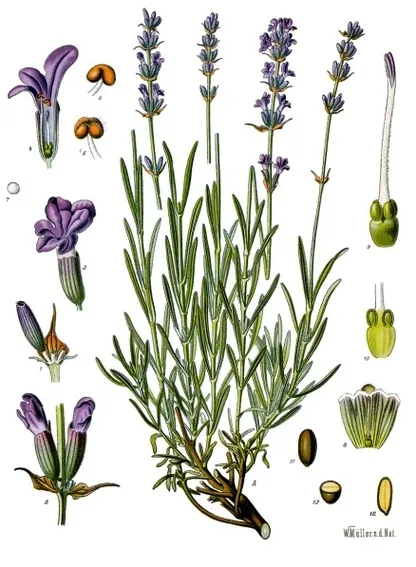
Lavender (Lavandula angustifolia), historical botanical illustration

Growing and using it

How to grow lavender

Life cycle

Woody perennial.

Hardiness

English lavender (Lavandula angustifolia) is listed for USDA Zones 5–9.

How to start

Nursery plant or rooted cutting. Choose English lavender, Lavandula angustifolia.

Starting from seed

Seed is possible but slow and variable.

Harvesting

Harvest flower spikes just as the flowers begin opening.

Grow in zone
Start indoors — Sow under cover in trays or pots, before it is warm enough to sow outsideStart indoors: MarchPlant out — Move a started plant into its final spot outdoorsPlant out: MayPlant out: JuneHarvest flower spikes — Gather flower spikes in these monthsHarvest flower spikes: JulyHarvest flower spikes: August

Excellent drainage is more important than rich soil. Winter wet is a common problem.

Gardening tools

(Paid links)