Skip to content
Medicinal plant

Basil

Ocimum basilicum

A digestive culinary herb, best used fresh.

What is basil used for?

Basil is mainly used as a fresh digestive herb for gas and bloating. Its aromatic leaves also make it an easy herb to use regularly in food.

What can I do with basil?

Basil can be used fresh in food or infused into vinegar. An herbal vinegar soaks the leaves in vinegar to draw out their flavor and plant compounds, then works well in dressings and marinades. Add fresh basil near the end of cooking to keep more of its aroma.

Similar herbs: Bee Balm, Dill, Rosemary

— Scroll down for recipes —
Uses
Digestion — Herbs traditionally used around digestion, appetite, stomach comfort, or after-meal preparations.
Properties

Aromatic — Rich in aromatic oils that often support digestion or breathing

Carminative — Helps relieve gas, bloating, and digestive discomfort

Energetics
Warming — Encourages warmth, movement, or circulation. Drying — Reduces excess moisture or secretions. Stimulating — Encourages activity, movement, or circulation.
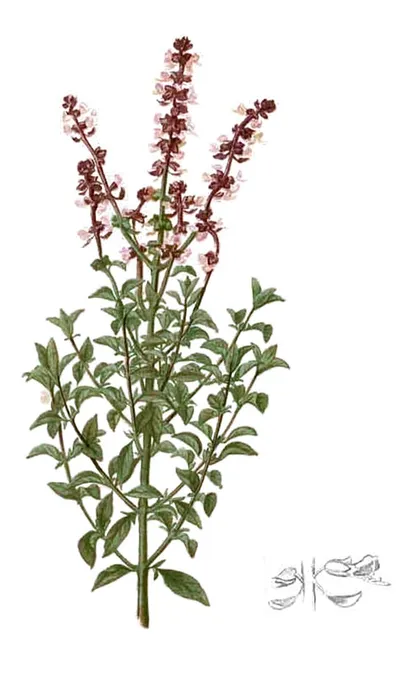
Basil (Ocimum basilicum), historical botanical illustration

Growing and using it

How to grow basil

Life cycle

Tender annual.

Hardiness

Annual in this guide; USDA perennial hardiness does not apply.

How to start

Seed or nursery plant. Choose a culinary sweet basil such as Genovese.

Starting from seed

Start indoors or direct sow once soil and nights are warm.

Harvesting

Harvest once plants are branching well, then cut repeatedly until frost.

Grow in zone
Start indoors — Sow under cover in trays or pots, before it is warm enough to sow outsideStart indoors: AprilDirect sow — Sow straight into the ground where the plant will growDirect sow: JunePlant out — Move a started plant into its final spot outdoorsPlant out: JuneHarvest leaves — Gather leaves in these monthsHarvest leaves: JuneHarvest leaves: JulyHarvest leaves: AugustHarvest leaves: September

Pinch flower buds if you want a longer leafy harvest.

Gardening tools

(Paid links)