

A carminative with traditional digestive support, and a traditional circulatory stimulant used for warming and circulation. Also a versatile aromatic used in food and externally in hair, scalp, and body preparations.
Medicinal plant
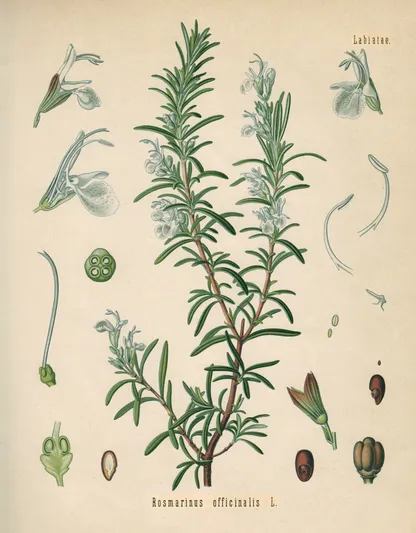
Rosemary
Salvia rosmarinus
A warming, circulatory culinary herb.
Uses
Digestion — Herbs traditionally used around digestion, appetite, stomach comfort, or after-meal preparations. Circulation — Herbs traditionally associated with the heart, with warmth, and with steady circulation.
Properties
Aromatic — Rich in aromatic oils that often support digestion or breathing
Carminative — Helps relieve gas, bloating, and digestive discomfort
Circulatory stimulant — Encourages blood flow and warmth
Energetics
Warming — Encourages warmth, movement, or circulation. Drying — Reduces excess moisture or secretions. Stimulating — Encourages activity, movement, or circulation.
Similar herbs: Basil, Bee Balm, Dill
Growing and using it
Life cycle
Woody perennial; container-grown in colder climates.
Hardiness
Hardiness varies by source and cultivar. Treat as a container plant in Zone 5; outdoor perennial culture is most dependable in Zones 8–10.
How to start
Potted nursery plant or rooted cutting.
Starting from seed
Seed is slow and erratic; a nursery plant is easier.
Harvesting
Harvest stem tips lightly once established.
Grow in zone
Plant out/container outdoors — Move the plant, or its container, outside for the seasonPlant out/container outdoors: JunePlant out/container outdoors: JulyPlant out/container outdoors: AugustPlant out/container outdoors: SeptemberHarvest tips — Gather tips in these monthsHarvest tips: JuneHarvest tips: JulyHarvest tips: AugustHarvest tips: SeptemberBring container indoors — Move the container back under cover before the coldBring container indoors: SeptemberBring container indoors: October
Grow in a container and bring it indoors before frost.
Gardening tools
(Paid links)

Steep rosemary in hot water to draw out its flavour and water-soluble properties.
Parts used
Leaf Fresh or driedGather
- a small sprig (or 1 tsp dried leaf)per cup
Harvest leaves before flowering. Use fresh, or dry in a single layer out of direct sun until crisp.
Prepare
- Add boiling water
- Cover and steep 5–10 minutes
- Strain
Apothecary supplies
(Paid links)


Infuse rosemary into a carrier oil for topical use in body oils, salves, and balms. For external or culinary use — use fully dried rosemary rather than wet fresh sprigs.
Parts used
LeafPrepare
- Put dried rosemary in a dry jar
- Cover with carrier oil
- Infuse 2–4 weeks
- Strain well
Use rosemary as food, seasoning, garnish, or an ingredient in everyday cooking. One of the best and safest routine uses.
Parts used
LeafPrepare
Use fresh or dried in cooking.