

A traditional sedative/hypnotic used for sleeplessness, and a nervine used when tension or a busy mind makes it hard to settle. Female flower cones (strobiles) are the part used.
Medicinal plant
Hops
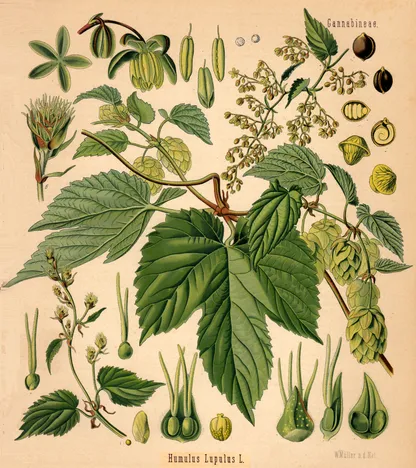
Humulus lupulus
A bitter sedative for sleeplessness.
Uses
Sleep — Herbs commonly used in relaxing or evening preparations.
Properties
Nervine — Supports, nourishes, or calms the nervous system
Sedative — Calms nervous activity and encourages rest or sleep
Bitter — Stimulates appetite and digestive secretions
Energetics
Cooling — Calms heat, irritation, or excess activity. Drying — Reduces excess moisture or secretions. Relaxing — Eases tension, constriction, or spasm.
Similar herbs: Catnip, Chamomile, Lavender
Growing and using it
Life cycle
Herbaceous perennial climbing bine.
Hardiness
USDA Zones 5–8.
How to start
Rhizome or nursery plant. Choose a female cone-producing plant.
Starting from seed
Skip seed if you want predictable cone production.
Harvesting
Harvest cones once they are papery, aromatic, and mature.
Grow in zone
Plant out — Move a started plant into its final spot outdoorsPlant out: AprilPlant out: MayHarvest cones — Gather cones in these monthsHarvest cones: AugustHarvest cones: September
Strong crops usually begin after the first establishment year.
Gardening tools
(Paid links)

Steep hops in hot water to draw out its flavour and water-soluble properties. Hops are bitter, so small quantities are usually combined with better-tasting calming herbs.
Parts used
Female cones DriedGather
- a small amountdried hops
Pick mature papery cones. Dry in a single layer out of direct sun until completely dry.
Prepare
- Cover with boiling water
- Steep 5–10 minutes
- Strain
Apothecary supplies
(Paid links)


Soak hops in alcohol for several weeks to make a concentrated, shelf-stable extract. A useful concentrated preparation, since hops tea is quite bitter.
Parts used
FlowerPrepare
- Use properly dried or fresh mature cones, following a reputable herb-specific tincture ratio
- Macerate about four weeks
- Strain
Apothecary supplies
(Paid links)