

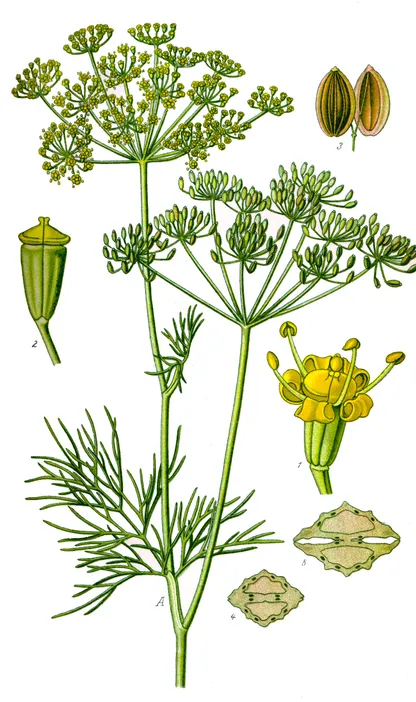
An aromatic carminative, traditionally used as a seed tea for gas, indigestion, and digestive cramping. The feathery leaves are a common culinary herb; for medicinal use, the dried ripe seed is the more concentrated preparation.
Medicinal plant
Dill
Anethum graveolens
An aromatic seed for gas, indigestion, and digestive cramping.
Uses
Digestion — Herbs traditionally used around digestion, appetite, stomach comfort, or after-meal preparations.
Properties
Carminative — Helps relieve gas, bloating, and digestive discomfort
Antispasmodic — Helps relax cramps, spasms, or tight muscles
Aromatic — Rich in aromatic oils that often support digestion or breathing
Energetics
Warming — Encourages warmth, movement, or circulation. Drying — Reduces excess moisture or secretions. Stimulating — Encourages activity, movement, or circulation.
People allergic to dill or other Apiaceae-family plants (carrot, celery, parsley) may react.
Similar herbs: Basil, Bee Balm, Mint
Growing and using it
Life cycle
Tender annual that readily self-seeds.
Hardiness
Annual; USDA perennial hardiness does not apply.
How to start
Direct-sown seed.
Starting from seed
Direct sow where it will grow; dill does not transplant especially well.
Harvesting
Harvest leaves repeatedly before flowering and collect mature seed heads later.
Grow in zone
Direct sow — Sow straight into the ground where the plant will growDirect sow: AprilDirect sow: MayDirect sow: JuneDirect sow: JulyHarvest leaves — Gather leaves in these monthsHarvest leaves: JuneHarvest leaves: JulyHarvest leaves: AugustHarvest leaves: SeptemberHarvest seeds — Gather seeds in these monthsHarvest seeds: AugustHarvest seeds: September
Allow a few plants to self-seed if you want it to return.
Gardening tools
(Paid links)
Steep dill in hot water to draw out its flavour and water-soluble properties. The useful medicinal preparation is a digestive tea from the ripe seed, not the leaf.
Parts used
SeedGather
- 1–2 tspcrushed ripe dill seed per cup of hot water
- Let the seed heads ripen and turn brown on the plant
- Cut the heads and dry them, then collect the seedHang the heads in a paper bag somewhere airy and shake it now and then — the seeds fall free when they are dry.
Prepare
- Lightly crush the ripe seed to help release its oils
- Cover with hot water
- Steep 10–15 minutes
- Strain
Apothecary supplies
(Paid links)


Use dill as food, seasoning, garnish, or an ingredient in everyday cooking.
Parts used
LeafPrepare
Use fresh feathery leaves (dill weed) in salads, sauces, and cooked dishes.