

A demulcent, moistening and soothing to dry or irritated tissues, and a vulnerary/anti-inflammatory used topically in traditional herbal practice for irritated skin. Also a nutritive edible spring green and flower.
Medicinal plant
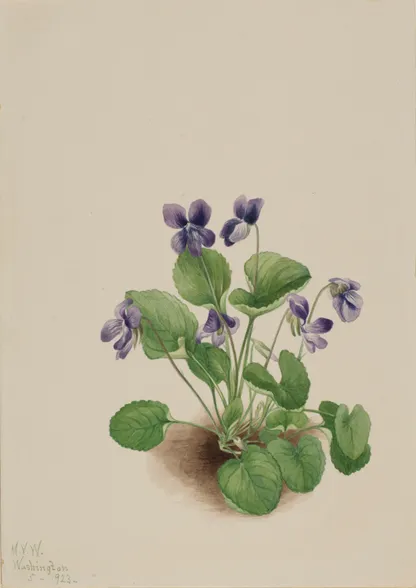
Violet
Viola spp.
A soothing spring green, fresh and topical.
Uses
Skin — Herbs used in topical preparations, or traditionally associated with soothing and caring for the skin.
Properties
Demulcent — Coats, moistens, and soothes irritated internal tissues
Lymphatic — Traditionally supports lymph flow and lymphatic function
Expectorant — Helps loosen and move mucus from the lungs and chest
Energetics
Cooling — Calms heat, irritation, or excess activity. Moistening — Adds or preserves moisture and soothes dryness. Relaxing — Eases tension, constriction, or spasm.
Similar herbs: Borage, Chickweed, Mullein
Growing and using it
Life cycle
Herbaceous perennial.
Hardiness
Species-dependent; Zone 5 remains the calendar default for this grouped Viola entry.
Harvesting
Harvest flowers during the spring bloom and leaves selectively through the growing season.
Grow in zone
Harvest flowers — Gather flowers in these monthsHarvest flowers: AprilHarvest flowers: MayHarvest flowers: JuneHarvest leaves — Gather leaves in these monthsHarvest leaves: AprilHarvest leaves: MayHarvest leaves: JuneHarvest leaves: JulyHarvest leaves: AugustHarvest leaves: September
Gardening tools
(Paid links)
Apply violet fresh, crushed, or moistened, directly to the skin. Chestnut School specifically pairs violet leaf and plantain leaf in soothing topical poultices.
Parts used
LeafGather
- as neededfresh violet and plantain leaves
Prepare
- Gather clean, fresh violet and plantain leaves
- Chop or blend with enough hot (not boiling) water to make a moist mash
- Allow to cool to a comfortable temperature
- Apply externally to minor, intact or superficially irritated skinDon't use a home poultice in place of care for deep, infected, or serious wounds.
Infuse violet into a carrier oil for topical use in body oils, salves, and balms.
Parts used
LeafPrepare
- Dry or thoroughly wilt violet leaves and flowers
- Cover completely with carrier oil
- Infuse 2–4 weeks
- Strain thoroughly and store cool and dark
Use violet as food, seasoning, garnish, or an ingredient in everyday cooking. One of the best ways to use violet.
Parts used
FlowerPrepare
- Add flowers to salads, desserts, fruit, drinks, or ice cubes
- Mix tender young leaves into salads rather than using them as the whole salad