

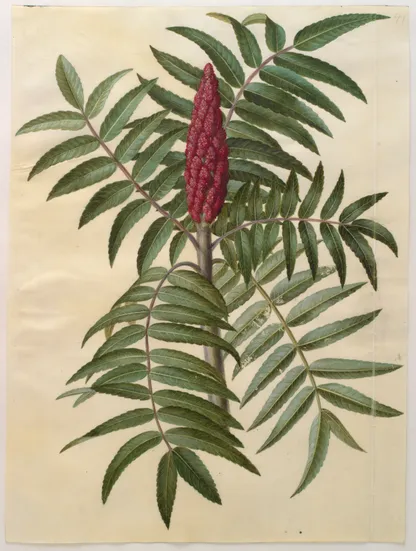
This is staghorn sumac (Rhus typhina), an astringent traditionally used from various plant parts. The red fruit clusters are especially valued as a tart, vitamin-rich culinary preparation.
Medicinal plant
Sumac
Rhus typhina
A tart, vitamin-rich fruit drink. Also called Velvet Sumac.
Properties
Astringent — Tightens and tones tissues; often drying
Energetics
Cooling — Calms heat, irritation, or excess activity. Drying — Reduces excess moisture or secretions. Toning — Firms, strengthens, or tightens tissues.
Do not confuse sumac with poison sumac (Toxicodendron vernix).
Similar herbs: Blueberry, Fireweed, Raspberry
Growing and using it
Life cycle
Deciduous perennial shrub or small tree.
Hardiness
Staghorn sumac (Rhus typhina) is hardy in USDA Zones 3–9.
How to start
Nursery plant, sucker, or rooted division.
Starting from seed
Seed is slower and requires dormancy treatment.
Harvesting
Harvest red berry clusters when fully colored and flavorful.
Grow in zone
Plant out — Move a started plant into its final spot outdoorsPlant out: AprilPlant out: MayPlant out: SeptemberPlant out: OctoberHarvest berry clusters — Gather berry clusters in these monthsHarvest berry clusters: AugustHarvest berry clusters: September
Harvest before heavy rain washes flavor from the clusters.
Gardening tools
(Paid links)

Steep sumac in hot water to draw out its flavour and water-soluble properties. Best home use is as a food/beverage rather than a concentrated medicine.
Parts used
BerryGather
- Correctly identify an edible red-berried Rhus
- Pick a clean red cluster on a dry day, before rain washes the flavour out of it
Prepare
- Place the cluster in cool water
- Crush or agitate lightly
- Steep until pleasantly tart
- Strain very well through fine cloth or a coffee filter to remove hairs and debris
- Sweeten if desired
Apothecary supplies
(Paid links)

