

A sialagogue that strongly stimulates saliva, and an oral anodyne that creates a distinctive tingling, numbing sensation traditionally used for temporary tooth and gum discomfort. Also traditionally used as an antimicrobial/immunostimulant — not a substitute for dental treatment or antibiotics when they’re needed.
Medicinal plant
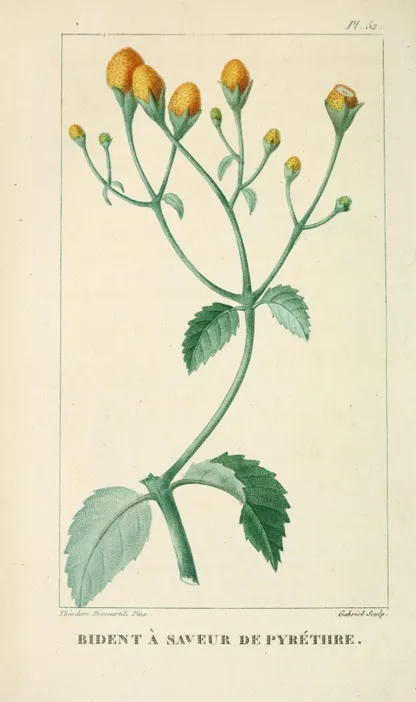
Spilanthes
Acmella oleracea
A tingling, saliva-stimulating plant for toothache. Also called Toothache Plant, Electric Daisy.
Uses
First aid — Herbs kept for simple topical household use — minor skin irritation, bites, bumps, and similar everyday needs.
Properties
Stimulant — Increases activity, energy, warmth, or movement
Antimicrobial — Helps inhibit microbes
Sialagogue — Encourages saliva production
Energetics
Warming — Encourages warmth, movement, or circulation. Drying — Reduces excess moisture or secretions. Stimulating — Encourages activity, movement, or circulation.
People sensitive to the Asteraceae/daisy family may react to spilanthes.
Similar herbs: Calendula, Nasturtium, St. John's Wort
Growing and using it
Life cycle
Tender perennial, usually grown as an annual.
Hardiness
Tender perennial in USDA Zones 9–11; grown as an annual in colder zones.
Starting from seed
Start indoors before the last frost; transplant into warm soil.
Harvesting
Harvest leaves and flower heads repeatedly from midsummer until frost.
Grow in zone
Start indoors — Sow under cover in trays or pots, before it is warm enough to sow outsideStart indoors: AprilDirect sow — Sow straight into the ground where the plant will growDirect sow: JunePlant out — Move a started plant into its final spot outdoorsPlant out: JuneHarvest leaves/flowers — Gather leaves/flowers in these monthsHarvest leaves/flowers: JulyHarvest leaves/flowers: AugustHarvest leaves/flowers: September
Start indoors for the most reliable harvest.
Gardening tools
(Paid links)

Soak spilanthes in alcohol for several weeks to make a concentrated, shelf-stable extract. An excellent way to preserve the fresh plant.
Parts used
FlowerGather
- 1:2fresh flowering aerial parts in 95% alcoholChestnut School's listed fresh-plant ratio
Prepare
- Harvest flowering aerial parts
- Chop and weigh, then cover according to the ratio
- Macerate about 4 weeks
- Strain and press
- Dilute before oral useDo not spray a strong tincture toward the back of the throat.
Apothecary supplies
(Paid links)
Use spilanthes as food, seasoning, garnish, or an ingredient in everyday cooking. The simplest way to understand the plant.
Parts used
FlowerPrepare
Nibble only a small piece of flower initially.Expect intense tingling and salivation.