

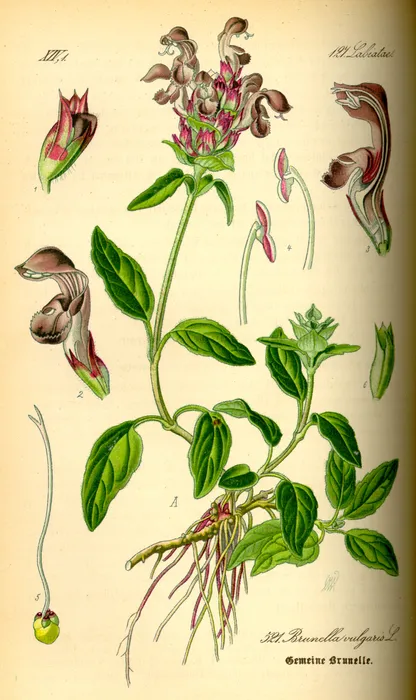
Self-heal is a small mint-family plant found in lawns, fields, roadsides, and shorelines throughout New England. Its traditional reputation is reflected in its names: it has long been used as an astringent and vulnerary for minor wounds and as a tea or gargle for sore throats.
Medicinal plant
Self-Heal
Prunella vulgaris
A common lawn herb for minor wounds and sore throats. Also called Heal-All.
Uses
Skin — Herbs used in topical preparations, or traditionally associated with soothing and caring for the skin. Respiratory — Herbs traditionally used in preparations for the throat, chest, sinuses, or seasonal respiratory comfort. First aid — Herbs kept for simple topical household use — minor skin irritation, bites, bumps, and similar everyday needs.
Properties
Astringent — Tightens and tones tissues; often drying
Vulnerary — Supports healing of wounds or damaged tissue
Diuretic — Encourages urination and fluid elimination
Energetics
Cooling — Calms heat, irritation, or excess activity. Drying — Reduces excess moisture or secretions. Toning — Firms, strengthens, or tightens tissues.
Similar herbs: Fireweed, Goldenrod, Plantain
Growing and using it
Life cycle
Low-growing herbaceous perennial that can self-seed and spread.
Hardiness
Prunella vulgaris is hardy in USDA Zones 3–9.
How to start
Plug or division for the easiest start; seed also works.
Starting from seed
Sow in spring or direct sow once soil has warmed.
Harvesting
Harvest leafy flowering tops during bloom.
Grow in zone
Start indoors — Sow under cover in trays or pots, before it is warm enough to sow outsideStart indoors: MarchStart indoors: AprilDirect sow — Sow straight into the ground where the plant will growDirect sow: MayPlant out — Move a started plant into its final spot outdoorsPlant out: MayHarvest flowering tops — Gather flowering tops in these monthsHarvest flowering tops: JuneHarvest flowering tops: JulyHarvest flowering tops: AugustHarvest flowering tops: September
Cut after bloom for fresh growth and to limit self-seeding.
Gardening tools
(Paid links)
Steep self-heal in hot water to draw out its flavour and water-soluble properties. A traditional astringent preparation for the flowering tops.
Parts used
Leafy flowering tops Fresh or driedGather
Cut the upper leafy stems as flowering begins. Use fresh, or dry in a single layer out of direct sun until crisp.
Prepare
- Cover with hot water
- Steep 10–15 minutes
- Strain
- Drink as tea, or cool completely and use as a gargle
Apothecary supplies
(Paid links)


Apply self-heal fresh, crushed, or moistened, directly to the skin. A simple traditional topical use.
Parts used
LeafPrepare
- Crush clean fresh leaves and flowers into a moist mash
- Apply externally to a minor superficial scrape, bite, or irritated area
- Remove and rinse the area when finished