

Flowers and buds are traditionally used as a nervine (gently calming) and astringent (toning to tissues), plus anti-inflammatory both topically and internally. The petals are for the heart in the old sense — a small comfort on hard days. The hips are valued as a nutritive food, rich in vitamin C and polyphenols, and are best after the first frost.
Medicinal plant
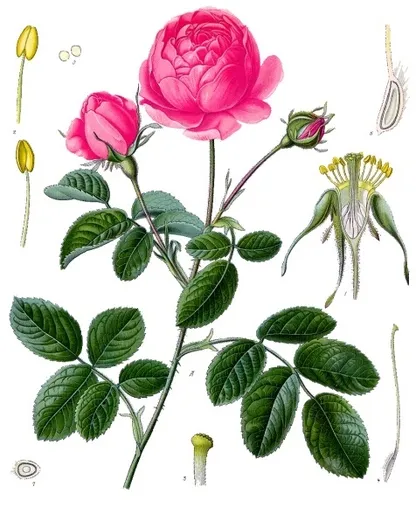
Rose
Rosa spp.
Petals for a calm heart, hips for winter vitamin C.
Uses
Skin — Herbs used in topical preparations, or traditionally associated with soothing and caring for the skin.
Properties
Astringent — Tightens and tones tissues; often drying
Nervine — Supports, nourishes, or calms the nervous system
Vulnerary — Supports healing of wounds or damaged tissue
Energetics
Cooling — Calms heat, irritation, or excess activity. Drying — Reduces excess moisture or secretions. Toning — Firms, strengthens, or tightens tissues.
Similar herbs: Fireweed, Self-Heal, Witch Hazel
Growing and using it
Life cycle
Perennial woody shrub.
Hardiness
Species and cultivar dependent; Zone 5 remains the calendar default for this grouped Rosa entry.
How to start
Potted or bare-root rose. Choose a fragrant species or cultivar with a known identity.
Starting from seed
Seed is not the practical route for a predictable rose.
Harvesting
Harvest flowers during bloom and hips after they color and mature.
Grow in zone
Plant out — Move a started plant into its final spot outdoorsPlant out: AprilPlant out: MayPlant out: SeptemberPlant out: OctoberHarvest flowers — Gather flowers in these monthsHarvest flowers: JuneHarvest flowers: JulyHarvest hips — Gather hips in these monthsHarvest hips: SeptemberHarvest hips: October
Gardening tools
(Paid links)
Steep rose in hot water to draw out its flavour and water-soluble properties.
Parts used
Petals Fresh or driedGather
- a small handfulfresh or dried fragrant petals
Pick freshly opened flowers after the dew has dried and remove the petals. Use fresh, or dry in a single layer out of direct sun until crisp.
Prepare
- Add boiling water
- Cover and steep 10 minutes
- Strain
Apothecary supplies
(Paid links)


Infuse rose into honey for a sweet preparation, taken by the spoonful or stirred into drinks.
Parts used
FlowerPrepare
- Use clean, dry or well-wilted petals
- Cover completely with honey
- Infuse 1–2 weeks
- Strain if desired
Gently simmer the tougher parts of rose — roots, bark, or berries — to draw their properties into water.
Parts used
BerryGather
- as neededcleaned, chopped hips with hairs/seeds removed
- Gather hips after the first frost, once they have softened
- Trim, halve, and scrape out the seeds and hairs
Prepare
- Add the cleaned, chopped hips to water
- Simmer gently about 10–15 minutes
- Strain extremely well