

A nutritive/alterative in traditional Western herbalism, containing isoflavones — compounds structurally similar to estrogen. Red-clover supplements are commonly promoted for menopausal hot flashes, cholesterol, and bone health, but NCCIH says human research hasn’t established conclusive benefit for any health condition.
Medicinal plant
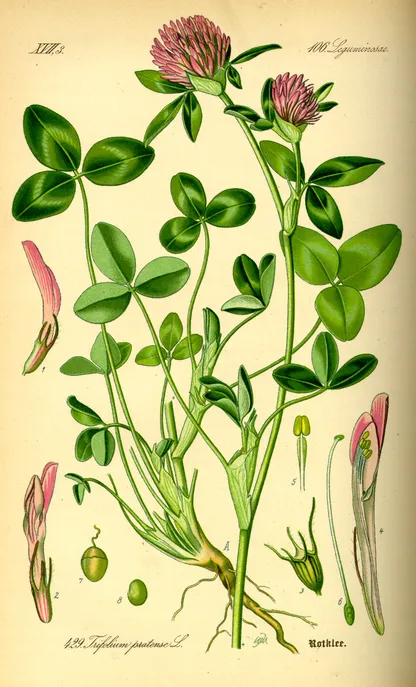
Red Clover
Trifolium pratense
A gentle nutritive tea, not a supplement.
Properties
Alterative — Traditionally supports gradual cleansing and elimination
Lymphatic — Traditionally supports lymph flow and lymphatic function
Nutritive — Provides nourishing minerals or other nutrients
Energetics
Cooling — Calms heat, irritation, or excess activity. Moistening — Adds or preserves moisture and soothes dryness. Relaxing — Eases tension, constriction, or spasm.
Similar herbs: Elderberry, Nettle, Violet
Growing and using it
Life cycle
Short-lived perennial, often behaving as a biennial.
Hardiness
USDA Zones 3–9.
How to start
Direct-sown seed.
Starting from seed
Broadcast or shallow-sow outdoors with good soil contact.
Harvesting
Harvest flower heads through repeated bloom flushes.
Grow in zone
Direct sow — Sow straight into the ground where the plant will growDirect sow: AprilDirect sow: MayDirect sow: AugustDirect sow: SeptemberHarvest flower heads — Gather flower heads in these monthsHarvest flower heads: JuneHarvest flower heads: JulyHarvest flower heads: AugustHarvest flower heads: September
Cutting can encourage another flush of bloom.
Gardening tools
(Paid links)
Steep red clover in hot water to draw out its flavour and water-soluble properties. The most sensible garden preparation — there's little reason to prioritize a concentrated tincture over a simple infusion.
Parts used
Flower heads DriedGather
Pick freshly opened flower heads after the dew has dried. Dry in a single layer out of direct sun until crisp.
Prepare
- Put the dried clover into a heat-safe jar
- Cover with boiling water and cover the jar
- For ordinary tea, steep 10–15 minutes — herbalists also use longer infusions for nutritive preparations
- Strain
Apothecary supplies
(Paid links)

