

Most useful here as an edible, pungent garden plant rather than something that needs to become a concentrated tincture. Leaves and flowers contain pungent mustard-oil-related compounds; young green seed pods are traditionally pickled as “poor man’s capers” (use a tested pickling recipe rather than improvising proportions for shelf-stable canning — refrigerator pickles are the simpler home option).
Medicinal plant
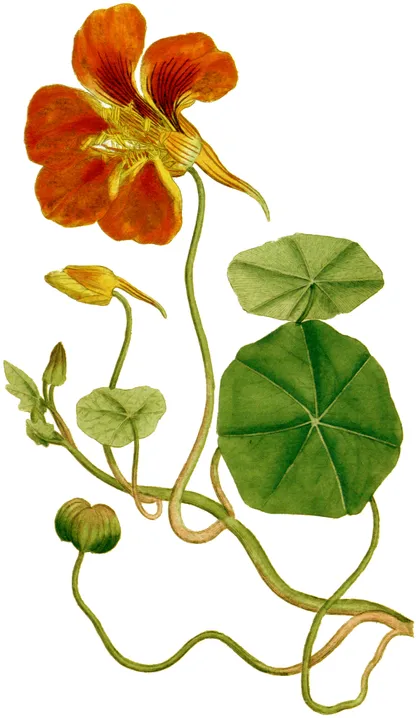
Nasturtium
Tropaeolum majus
A peppery edible flower and leaf, best fresh.
Properties
Antimicrobial — Helps inhibit microbes
Expectorant — Helps loosen and move mucus from the lungs and chest
Energetics
Warming — Encourages warmth, movement, or circulation. Drying — Reduces excess moisture or secretions. Stimulating — Encourages activity, movement, or circulation.
Similar herbs: Spilanthes, Anise Hyssop, Calendula
Growing and using it
Life cycle
Tender annual.
Hardiness
Tender perennial in Zones 9–11, grown as an annual in colder zones.
How to start
Direct-sown seed.
Starting from seed
Direct sow after frost; indoor starts are optional if kept in individual pots.
Harvesting
Harvest leaves and flowers repeatedly until frost; collect tender green seed pods later.
Grow in zone
Start indoors — Sow under cover in trays or pots, before it is warm enough to sow outsideStart indoors: AprilStart indoors: MayDirect sow — Sow straight into the ground where the plant will growDirect sow: MayDirect sow: JunePlant out — Move a started plant into its final spot outdoorsPlant out: JuneHarvest leaves/flowers — Gather leaves/flowers in these monthsHarvest leaves/flowers: JuneHarvest leaves/flowers: JulyHarvest leaves/flowers: AugustHarvest leaves/flowers: SeptemberHarvest green seed pods — Gather green seed pods in these monthsHarvest green seed pods: AugustHarvest green seed pods: September
Too much fertilizer makes more leaves and fewer flowers.
Gardening tools
(Paid links)
Soak nasturtium in vinegar to draw out minerals and other plant compounds.
Parts used
LeafPrepare
- Wash leaves/flowers and dry surface moisture thoroughly
- Loosely fill a clean jar with nasturtium
- Cover completely with vinegar
- Refrigerate while infusing
- Strain when the flavor is strong enough
- Keep refrigerated for culinary use
Use nasturtium as food, seasoning, garnish, or an ingredient in everyday cooking. The easiest preparation, and by far the most value this plant gives.
Parts used
FlowerPrepare
Add clean young leaves and flowers to green salads.Flavor is peppery, similar to watercress or radish — flowers are generally milder than leaves.