

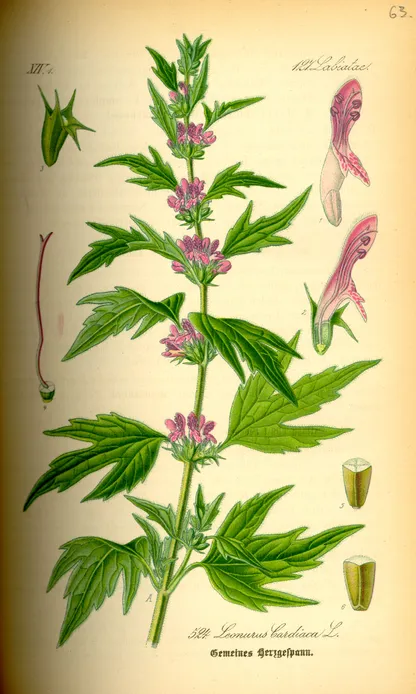
Motherwort is a bitter traditional nervine associated with nervous tension and a noticeable, pounding heartbeat — an association reflected in both its common and botanical names. It is naturalized throughout New England and is usually harvested as the leafy flowering tops.
Medicinal plant
Motherwort
Leonurus cardiaca
A bitter nervine traditionally used for nervous tension and palpitations.
Uses
Circulation — Herbs traditionally associated with the heart, with warmth, and with steady circulation.
Properties
Nervine — Supports, nourishes, or calms the nervous system
Bitter — Stimulates appetite and digestive secretions
Antispasmodic — Helps relax cramps, spasms, or tight muscles
Energetics
Cooling — Calms heat, irritation, or excess activity. Drying — Reduces excess moisture or secretions. Relaxing — Eases tension, constriction, or spasm.
Do not use during pregnancy.
Similar herbs: Catnip, Chamomile, Hops
Growing and using it
Life cycle
Herbaceous perennial that readily self-seeds.
Hardiness
Cold-temperate perennial; current North American data supports roughly USDA Zones 3–8.
How to start
Seed or nursery plant.
Starting from seed
Fall sowing is easy; cold exposure can improve spring germination.
Harvesting
Harvest leafy flowering tops during early to peak bloom.
Grow in zone
Start indoors — Sow under cover in trays or pots, before it is warm enough to sow outsideStart indoors: MarchStart indoors: AprilDirect sow — Sow straight into the ground where the plant will growDirect sow: AprilDirect sow: MayDirect sow: OctoberDirect sow: NovemberPlant out — Move a started plant into its final spot outdoorsPlant out: MayHarvest flowering tops — Gather flowering tops in these monthsHarvest flowering tops: JuneHarvest flowering tops: JulyHarvest flowering tops: August
Cut after flowering if you want to limit self-seeding.
Gardening tools
(Paid links)

Steep motherwort in hot water to draw out its flavour and water-soluble properties. Motherwort is distinctly bitter, so tea is usually kept simple and fairly light.
Parts used
Leafy flowering tops DriedGather
Cut the upper leafy stems as flowering begins. Dry in a single layer out of direct sun until crisp.
Prepare
- Cover with hot water
- Steep 10–15 minutes
- Strain
Apothecary supplies
(Paid links)


Soak motherwort in alcohol for several weeks to make a concentrated, shelf-stable extract. A practical way to preserve the short flowering harvest.
Parts used
FlowerPrepare
- Harvest fresh leafy flowering tops
- Chop finely
- Use a reputable motherwort-specific tincture ratio
- Macerate about 4 weeks
- Press and strain
Apothecary supplies
(Paid links)