

A nervine traditionally used for nervous tension and mild restlessness, and a carminative for digestive discomfort tied to tension, gas, and bloating. Aromatic and gently relaxing.
Medicinal plant
Lemon Balm
Melissa officinalis
For nervous tension and a tense stomach.
Uses
Digestion — Herbs traditionally used around digestion, appetite, stomach comfort, or after-meal preparations. Sleep — Herbs commonly used in relaxing or evening preparations.
Properties
Nervine — Supports, nourishes, or calms the nervous system
Carminative — Helps relieve gas, bloating, and digestive discomfort
Antispasmodic — Helps relax cramps, spasms, or tight muscles
Energetics
Cooling — Calms heat, irritation, or excess activity. Relaxing — Eases tension, constriction, or spasm. Calming — Settles excessive nervous or functional activity.
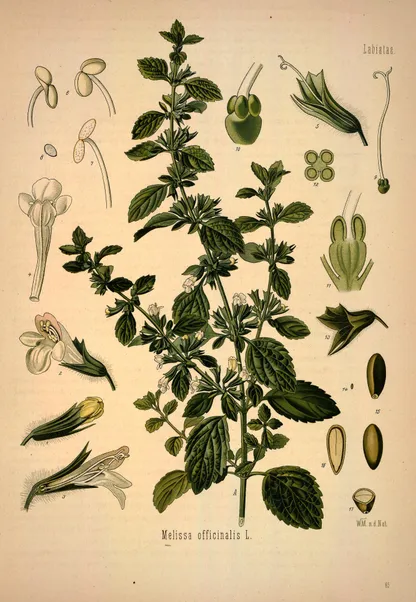
Similar herbs: Catnip, Chamomile, Anise Hyssop
Growing and using it
Life cycle
Hardy perennial.
Hardiness
USDA Zones 4–9.
How to start
Seed or nursery plant. Choose Melissa officinalis.
(Paid link)
Starting from seed
Sow shallowly; light helps germination.
Harvesting
Cut leaves repeatedly; for drying, harvest before or just as flowering begins.
Grow in zone
Start indoors — Sow under cover in trays or pots, before it is warm enough to sow outsideStart indoors: MarchStart indoors: AprilDirect sow — Sow straight into the ground where the plant will growDirect sow: MayDirect sow: JunePlant out — Move a started plant into its final spot outdoorsPlant out: MayPlant out: JuneHarvest leaves — Gather leaves in these monthsHarvest leaves: JuneHarvest leaves: JulyHarvest leaves: AugustHarvest leaves: September
Cut before seed set if you want to limit spreading.
Gardening tools
(Paid links)
Steep lemon balm in hot water to draw out its flavour and water-soluble properties. Fresh lemon balm is especially good.
Parts used
Leaf Fresh or driedGather
- a generous handful fresh, or 1–2 tsp driedleaves
- to coverboiling water
Harvest leaves before or just as flowering begins. Use fresh, or dry in a single layer out of direct sun until crisp.
Prepare
- If fresh, bruise the leaves lightly
- Put them in a mug or covered pot
- Add boiling water
- Cover and steep 10–15 minutes
- Strain
Apothecary supplies
(Paid links)


Soak lemon balm in alcohol for several weeks to make a concentrated, shelf-stable extract. Useful because dried lemon balm loses its aroma comparatively quickly.
Parts used
LeafGather
- 1:2fresh leaves/tops by weight to menstruum by volumea common starting ratio
Prepare
- Chop freshly harvested leaves and tops
- Combine with menstruum at the ratio above
- Macerate about 4 weeks
- Strain
Apothecary supplies
(Paid links)
Use lemon balm as food, seasoning, garnish, or an ingredient in everyday cooking.
Parts used
LeafPrepare
Use fresh in pesto, fruit, salads, cold drinks, syrups, or desserts.