Skip to content
Medicinal plant

Goldenrod

Solidago spp.

For a runny head cold and sluggish kidneys, not for hay fever.

An astringent traditionally used for runny, boggy tissues and upper-respiratory secretions, and a diuretic/urinary trophorestorative with a long history of European and North American use for urinary tract support. Also anti-inflammatory and vulnerary when used topically for sore muscles and minor skin complaints, and an expectorant for loosening respiratory mucus.

It does not cause hay fever — the ragweed growing beside it does.
Uses
Skin — Herbs used in topical preparations, or traditionally associated with soothing and caring for the skin. Respiratory — Herbs traditionally used in preparations for the throat, chest, sinuses, or seasonal respiratory comfort.
Properties

Diuretic — Encourages urination and fluid elimination

Astringent — Tightens and tones tissues; often drying

Anticatarrhal — Helps reduce or clear excess mucus and congestion

Energetics
Warming — Encourages warmth, movement, or circulation. Drying — Reduces excess moisture or secretions. Toning — Firms, strengthens, or tightens tissues.
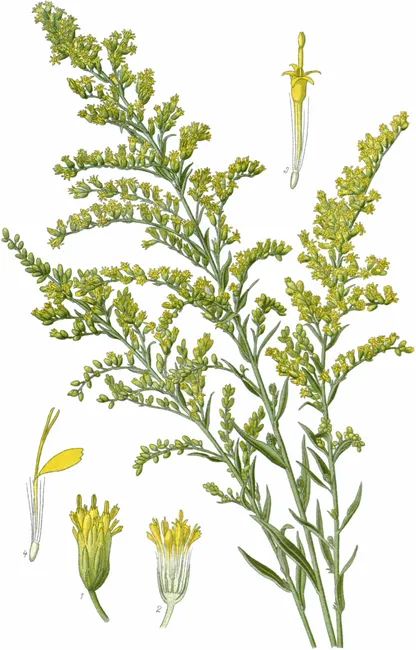
Goldenrod (Solidago spp.), historical botanical illustration

Similar herbs: Self-Heal, Sage, Wild Pansy

Growing and using it

Life cycle

Herbaceous perennial.

Hardiness

Species vary; goldenrod as a group is very cold-hardy, with regional sources listing it to about Zone 2.

Harvesting

Gather flowering tops during the main late-summer bloom.

Grow in zone
Harvest flowering tops — Gather flowering tops in these monthsHarvest flowering tops: AugustHarvest flowering tops: September

Gardening tools

(Paid links)