An astringent and vulnerary plant of open, disturbed ground and burned-over land, traditionally used topically for minor wounds and irritated skin.
Medicinal plant
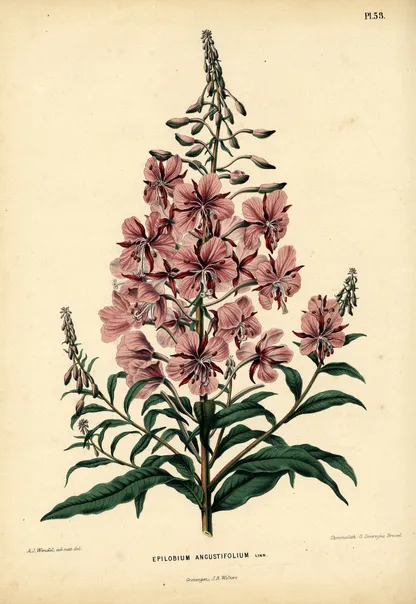
Fireweed
Chamerion angustifolium
An astringent, wound-tending plant of open, disturbed ground. Also called Rosebay Willowherb.
Uses
Skin — Herbs used in topical preparations, or traditionally associated with soothing and caring for the skin. First aid — Herbs kept for simple topical household use — minor skin irritation, bites, bumps, and similar everyday needs.
Properties
Astringent — Tightens and tones tissues; often drying
Vulnerary — Supports healing of wounds or damaged tissue
Energetics
Cooling — Calms heat, irritation, or excess activity. Drying — Reduces excess moisture or secretions. Toning — Firms, strengthens, or tightens tissues.
Similar herbs: Self-Heal, Plantain, Calendula
Growing and using it
Life cycle
Rhizomatous herbaceous perennial.
Hardiness
Commonly listed for USDA Zones 3–7.
How to start
Plugs for speed, or seed for establishing a larger patch.
Starting from seed
Surface sow; fall or winter sowing is easiest.
Harvesting
Harvest young shoots first, then leaves and flowers as the season progresses.
Grow in zone
Start indoors — Sow under cover in trays or pots, before it is warm enough to sow outsideStart indoors: FebruaryStart indoors: MarchDirect sow — Sow straight into the ground where the plant will growDirect sow: AprilDirect sow: OctoberDirect sow: NovemberPlant out — Move a started plant into its final spot outdoorsPlant out: MayPlant out: JuneHarvest young shoots — Gather young shoots in these monthsHarvest young shoots: MayHarvest young shoots: JuneHarvest leaves — Gather leaves in these monthsHarvest leaves: JuneHarvest leaves: JulyHarvest leaves: AugustHarvest flowers — Gather flowers in these monthsHarvest flowers: JulyHarvest flowers: August
It spreads by rhizomes once established.
Gardening tools
(Paid links)