

The root is a traditional bitter/cholagogue used to stimulate digestion and bile flow, and a digestive and liver-supportive bitter. The leaf is a diuretic that increases urine output; young leaves are a nutritive bitter green. NCCIH notes a long history of traditional use, while clinical evidence for treating specific health conditions remains limited.
Medicinal plant
Dandelion
Taraxacum officinale
A bitter root for digestion, a diuretic leaf.
Uses
Digestion — Herbs traditionally used around digestion, appetite, stomach comfort, or after-meal preparations.
Properties
Bitter — Stimulates appetite and digestive secretions
Hepatic — Traditionally supports liver function
Diuretic — Encourages urination and fluid elimination
Energetics
Cooling — Calms heat, irritation, or excess activity. Drying — Reduces excess moisture or secretions.
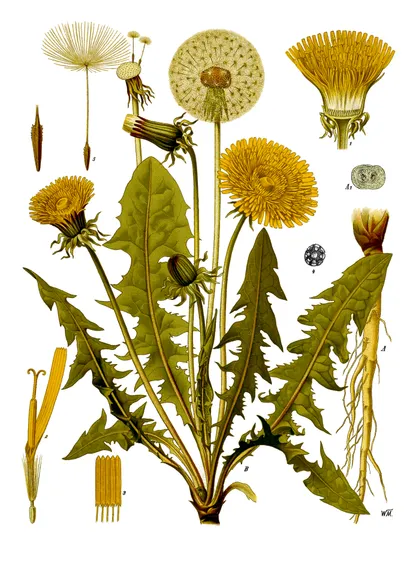
Confirm identification before harvesting; several plants can resemble dandelion.
Similar herbs: Catnip, Chamomile, Yarrow
Growing and using it
Life cycle
Herbaceous perennial.
Hardiness
USDA Zones 3–10.
Harvesting
Harvest leaves and flowers repeatedly; digging the root removes the plant.
Grow in zone
Harvest leaves — Gather leaves in these monthsHarvest leaves: AprilHarvest leaves: MayHarvest leaves: JuneHarvest leaves: SeptemberHarvest flowers — Gather flowers in these monthsHarvest flowers: AprilHarvest flowers: MayHarvest flowers: JuneHarvest roots — Gather roots in these monthsHarvest roots: MarchHarvest roots: AprilHarvest roots: OctoberHarvest roots: November
Young spring leaves are usually the most tender.
Gardening tools
(Paid links)

Gently simmer the tougher parts of dandelion — roots, bark, or berries — to draw their properties into water.
Parts used
RootGather
- as neededfresh chopped or dried root
- Dig roots and scrub them clean
- Slice them thin, and use fresh or dry them firstMuch longer than leaves, and worth a dehydrator at 95–115°F if you have one. Dry when a slice snaps cleanly instead of bending.
Prepare
- Add the chopped root to cool water
- Bring to a gentle simmer
- Simmer 10–20 minutes
- Strain
Soak dandelion in alcohol for several weeks to make a concentrated, shelf-stable extract. Fall-dug root is well suited to tincture.
Parts used
RootPrepare
- Clean and chop root finely
- Use an herb-specific tincture ratio
- Macerate around four weeks
- Press and strain
Apothecary supplies
(Paid links)
Use dandelion as food, seasoning, garnish, or an ingredient in everyday cooking.
Parts used
LeafPrepare
Young spring leaves can go into salads or be cooked with milder greens.