

Chickweed is a mild, edible cool-season herb that thrives in gardens, lawns, and disturbed ground. It has a long history of topical use for itchy, irritated skin, while the tender leaves and stems are also eaten as a fresh spring green.
Medicinal plant
Chickweed
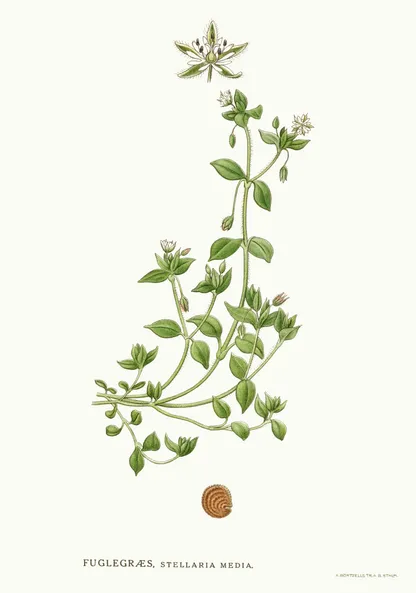
Stellaria media
A cooling spring green for itchy, irritated skin. Also called Common Chickweed, Starwort.
Uses
Skin — Herbs used in topical preparations, or traditionally associated with soothing and caring for the skin.
Properties
Demulcent — Coats, moistens, and soothes irritated internal tissues
Emollient — Softens, moisturizes, and soothes the skin
Vulnerary — Supports healing of wounds or damaged tissue
Energetics
Cooling — Calms heat, irritation, or excess activity. Moistening — Adds or preserves moisture and soothes dryness.
Similar herbs: Plantain, Jewelweed, Violet
Growing and using it
Life cycle
Cool-season annual that readily self-seeds.
Hardiness
Cool-season annual; USDA perennial hardiness does not apply.
How to start
Direct sow, or let an existing patch self-seed.
Starting from seed
Direct sow into cool soil.
Harvesting
Harvest tender tops repeatedly while growth stays lush.
Grow in zone
Direct sow — Sow straight into the ground where the plant will growDirect sow: AprilDirect sow: MayDirect sow: SeptemberDirect sow: OctoberHarvest tender tops — Gather tender tops in these monthsHarvest tender tops: AprilHarvest tender tops: MayHarvest tender tops: JuneHarvest tender tops: SeptemberHarvest tender tops: OctoberHarvest tender tops: November
Grows best in cool weather. Summer heat usually slows or ends growth.
Gardening tools
(Paid links)

Apply chickweed fresh, crushed, or moistened, directly to the skin. A classic simple preparation for itchy or irritated skin.
Parts used
LeafPrepare
- Crush clean fresh chickweed into a moist mash
- Apply directly to the irritated area or spread onto a clean cloth
- Remove when the poultice warms or dries
Use chickweed as food, seasoning, garnish, or an ingredient in everyday cooking. Chickweed is mild enough to use as a fresh spring green.
Parts used
LeafPrepare
- Harvest tender clean tops
- Rinse well
- Chop and add fresh to salads, sandwiches, or pesto, or cook briefly like a tender green