

A traditional nervine and carminative, used as a mild, calming digestive tea. Catnip has a long history of human tea use, but clinical evidence supporting medicinal use in people is limited — keep claims explicitly traditional.
Medicinal plant
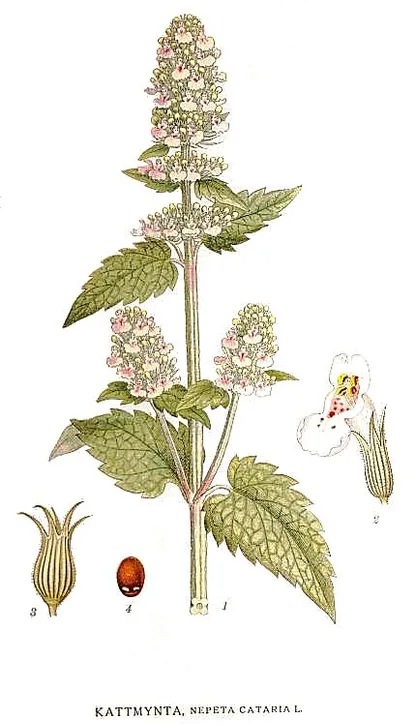
Catnip
Nepeta cataria
A traditional mild calming and digestive tea.
Uses
Digestion — Herbs traditionally used around digestion, appetite, stomach comfort, or after-meal preparations. Sleep — Herbs commonly used in relaxing or evening preparations.
Properties
Nervine — Supports, nourishes, or calms the nervous system
Carminative — Helps relieve gas, bloating, and digestive discomfort
Antispasmodic — Helps relax cramps, spasms, or tight muscles
Energetics
Cooling — Calms heat, irritation, or excess activity. Drying — Reduces excess moisture or secretions. Relaxing — Eases tension, constriction, or spasm.
Similar herbs: Chamomile, Lemon Balm, Anise Hyssop
Growing and using it
Life cycle
Herbaceous perennial.
Hardiness
USDA Zones 3–9.
How to start
Seed or nursery plant. Choose true catnip, Nepeta cataria.
Starting from seed
Start indoors or direct sow; established plants also self-seed readily.
Harvesting
Cut leaves repeatedly and harvest flowering tops as bloom begins.
Grow in zone
Start indoors — Sow under cover in trays or pots, before it is warm enough to sow outsideStart indoors: MarchStart indoors: AprilDirect sow — Sow straight into the ground where the plant will growDirect sow: MayDirect sow: JuneDirect sow: SeptemberPlant out — Move a started plant into its final spot outdoorsPlant out: MayPlant out: JuneHarvest leaves — Gather leaves in these monthsHarvest leaves: JuneHarvest leaves: JulyHarvest leaves: AugustHarvest leaves: SeptemberHarvest flowers — Gather flowers in these monthsHarvest flowers: JulyHarvest flowers: AugustHarvest flowers: September
Cut after flowering if you want to limit self-seeding.
Gardening tools
(Paid links)
Steep catnip in hot water to draw out its flavour and water-soluble properties. Catnip has a long history of human tea use, though modern clinical evidence in people is limited — keep claims traditional.
Parts used
Leafy flowering tops Fresh or driedGather
- 1–2 tsp dried, or 1 tbsp freshleafy flowering tops per cup of hot water
Cut the upper leafy stems as flowering begins. Use fresh, or dry in a single layer out of direct sun until crisp.
Prepare
- Cover the herb with hot water
- Cover and steep 10 minutes
- Strain
Apothecary supplies
(Paid links)

