

A vulnerary that supports minor wound and skin repair, and an anti-inflammatory traditionally used for irritated, dry, inflamed skin. Also traditionally used internally as a gentle lymphatic herb, though topical use is the standout home preparation.
Medicinal plant
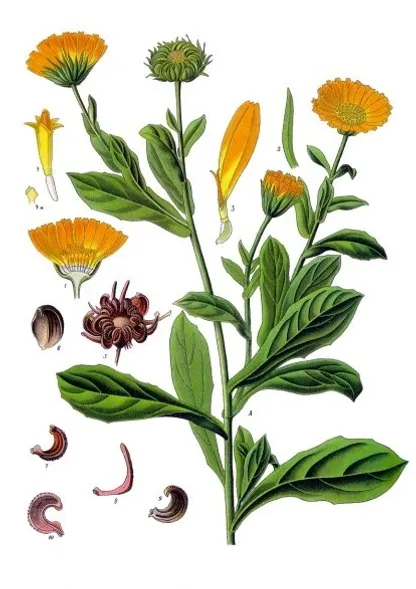
Calendula
Calendula officinalis
For minor wounds and irritated, dry skin.
Uses
Skin — Herbs used in topical preparations, or traditionally associated with soothing and caring for the skin. First aid — Herbs kept for simple topical household use — minor skin irritation, bites, bumps, and similar everyday needs.
Properties
Vulnerary — Supports healing of wounds or damaged tissue
Lymphatic — Traditionally supports lymph flow and lymphatic function
Antimicrobial — Helps inhibit microbes
Energetics
Warming — Encourages warmth, movement, or circulation. Drying — Reduces excess moisture or secretions. Toning — Firms, strengthens, or tightens tissues.
Similar herbs: St. John's Wort, Fireweed, Self-Heal
Growing and using it
Life cycle
Annual that readily self-seeds.
Hardiness
Annual; USDA perennial hardiness does not apply.
Starting from seed
Direct sow or start indoors a few weeks before planting out.
Harvesting
Pick flowers repeatedly to keep plants blooming.
Grow in zone
Start indoors — Sow under cover in trays or pots, before it is warm enough to sow outsideStart indoors: MarchStart indoors: AprilDirect sow — Sow straight into the ground where the plant will growDirect sow: MayDirect sow: JunePlant out — Move a started plant into its final spot outdoorsPlant out: MayHarvest flowers — Gather flowers in these monthsHarvest flowers: JuneHarvest flowers: JulyHarvest flowers: AugustHarvest flowers: SeptemberHarvest flowers: October
Deadhead or harvest often for continuous bloom.
Gardening tools
(Paid links)
Steep calendula in hot water to draw out its flavour and water-soluble properties.
Parts used
Whole flower head DriedGather
- 1–2 tspdried flower per cup
Pick freshly opened flower heads after the dew has dried. Use fresh, or dry in a single layer out of direct sun until completely dry through the center.
Prepare
- Cover with boiling water
- Steep 10–15 minutes
- Strain
Apothecary supplies
(Paid links)


Infuse calendula into a carrier oil for topical use in body oils, salves, and balms. One of the best uses of homegrown calendula.
Parts used
FlowerGather
- enough to fill a jar halfwaydried calendula flowers
- to cover by at least 1 inolive oil or another stable carrier oil
Prepare
- Dry or thoroughly wilt the flowers firstWater trapped in oil encourages spoilage.
- Fill a dry jar about halfway with dried calendula flowers
- Cover with carrier oil by at least 1 inch
- Stir out bubbles and keep plant material submerged
- Infuse 3–4 weeks in a warm, dark place, shaking regularly
- Strain very well
- Label and store cool and darkUse externally on dry or irritated intact skin, or turn into a salve.