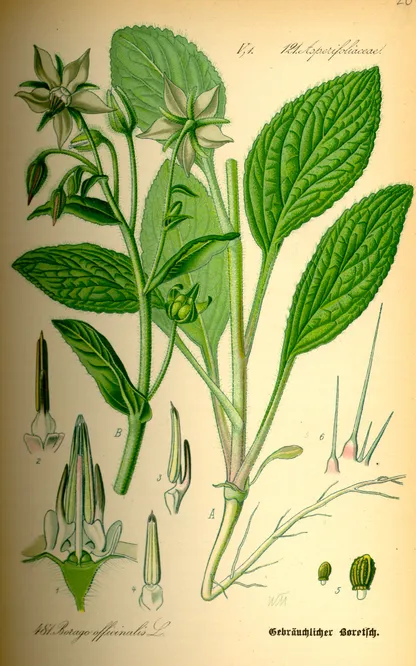
Borage has a long history as a cooling, moistening herb, especially for dry or irritated respiratory conditions and feverish colds. Traditional actions include demulcent, diaphoretic, and expectorant uses. Modern use is more cautious because the leaf and flower contain pyrrolizidine alkaloids, so it is not a good choice for frequent or long-term internal use.
Medicinal plant
Borage
Borago officinalis
A cooling, soothing herb with a long history of respiratory use.
Uses
Respiratory — Herbs traditionally used in preparations for the throat, chest, sinuses, or seasonal respiratory comfort.
Properties
Demulcent — Coats, moistens, and soothes irritated internal tissues
Diaphoretic — Encourages sweating
Expectorant — Helps loosen and move mucus from the lungs and chest
Energetics
Cooling — Calms heat, irritation, or excess activity. Moistening — Adds or preserves moisture and soothes dryness. Relaxing — Eases tension, constriction, or spasm.
Borage leaf and flower contain pyrrolizidine alkaloids (PAs), which can damage the liver with repeated use. Avoid frequent or long-term internal use.
Similar herbs: Mullein, Anise Hyssop, Elderberry
Growing and using it
Life cycle
Annual.
Hardiness
Annual; USDA perennial hardiness does not apply.
How to start
Direct-sown seed.
Starting from seed
Direct sow where it will grow; borage dislikes root disturbance.
Harvesting
Harvest young leaves and flowers through the growing season.
Grow in zone
Direct sow — Sow straight into the ground where the plant will growDirect sow: MayDirect sow: JuneHarvest leaves — Gather leaves in these monthsHarvest leaves: JuneHarvest leaves: JulyHarvest leaves: AugustHarvest leaves: SeptemberHarvest flowers — Gather flowers in these monthsHarvest flowers: JuneHarvest flowers: JulyHarvest flowers: AugustHarvest flowers: September
Let a few plants self-seed if you want it to return.
Gardening tools
(Paid links)