

An astringent leaf, traditionally taken as a toning tea. The fresh berries are a nutritive food in their own right, but that’s a culinary use, not the basis of this medicinal-properties record — this entry is about the leaf.
Medicinal plant
Blueberry
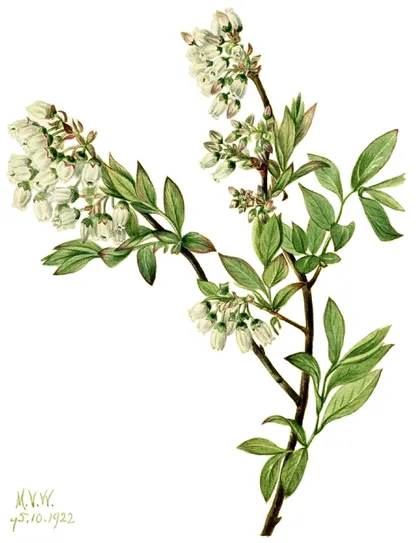
Vaccinium corymbosum
An astringent leaf traditionally used as a tea. Also called Highbush Blueberry.
Properties
Astringent — Tightens and tones tissues; often drying
Energetics
Cooling — Calms heat, irritation, or excess activity. Drying — Reduces excess moisture or secretions. Toning — Firms, strengthens, or tightens tissues.
Similar herbs: Fireweed, Raspberry, Rose
Growing and using it
Life cycle
Deciduous perennial shrub.
Hardiness
Cultivar-dependent. Use a northern highbush cultivar rated for the local zone; Zone 5 remains the calendar default.
How to start
Nursery-grown northern highbush blueberry. Plant two compatible cultivars for better fruiting.
Starting from seed
Skip seed if you want a predictable cultivar.
Harvesting
Harvest selected red fall leaves once the shrub is established.
Grow in zone
Plant out — Move a started plant into its final spot outdoorsPlant out: AprilPlant out: MayHarvest leaves — Gather leaves in these monthsHarvest leaves: SeptemberHarvest leaves: October
Keep soil acidic. Northern New England guidance favors early-spring planting; cultivar choice still controls hardiness and fruit timing.
Gardening tools
(Paid links)

Steep blueberry in hot water to draw out its flavour and water-soluble properties. A simple astringent, toning tea.
Parts used
Leaf DriedGather
- 1–2 tspdried leaf per cup of hot water
Harvest leaves in fall. Dry in a single layer out of direct sun until crisp.
Prepare
- Cover the dried leaf with hot water
- Steep about 10 minutes
- Strain
Apothecary supplies
(Paid links)

